
LostGolfBalls.com BLOG

Information and tips on everything golf ball related from the largest recycler of used golf balls in the world

All Posts

How the Titleist Pro V1 Factors into Your Golf Game—or Should

 Updated 2/28/17

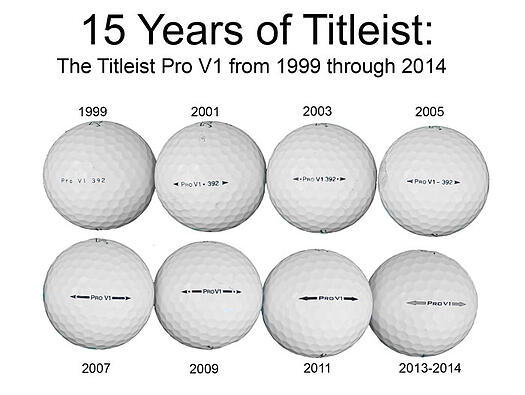
pro-v1-over-the-years2

SUMMARY: The history and technology of the Titleist ProV1—and how to know whether it’s the right ball for your game.

A vast majority of the golfing population knows the Titleist Pro V1 is the number one ball in golf.

Heck, even some non-golfers know about the Pro V1. Maybe that’s because they hear their significant others talk about golf all day long—but that’s neither here nor there. (And, as you already know, the LostGolfBalls customer service team is heavy on Titleist Pro V1 fans.)

So you’ve heard about it, and you wonder: How does this ball factor into my game—or should it?

The History of the Pro V1

In 1932, Phil W. Young was playing a round of golf when he missed a well stroked putt during the course of play. A graduate of the Massachusetts Institute of Technology, Paul used science and, more specifically, a dentist’s x-ray machine, to get to the bottom of the errant putt. He came to find out that the core was not properly centered. Soon after this discovery, he partnered with three other men to found the Acushnet Process Company. Three years later, it introduced its first golf ball, branded Titleist.

While technology and golf boomed in the ‘90s, manufacturers scrambled for the next big thing. At that time, you had balata and wound golf balls with liquid centers for performance and control to aid the above average player. In addition, there were two-piece solid core golf balls for distance and durability for the weekend warrior. Engineers at Titleist began to try to meld these two golf-ball worlds together!

After many years and countless prototypes, one model kept rising to the top with PGA Tour professionals at the Acushnet, Massachusetts, testing facility. In the summer of 2000, one hundred Tour professionals were given the ball to sample on the range and during practice rounds. The feedback: Titleist had hit on something that no one had seen before.

In the fall of 2000, Titleist officially introduced the ball and forty-seven players leaped at the opportunity to put it in play. They called the ball “ProV1;” the “Pro” stands for “professional,” the “V” stands for “veneer,” and the numeral 1 signifies its standing as the first of its kind.  Using the new Titleist ball, Billy Andrade, ranked 159th on the Tour at the time, won the Invensys Classic in Las Vegas.  

The landscape of golf was forever changed.

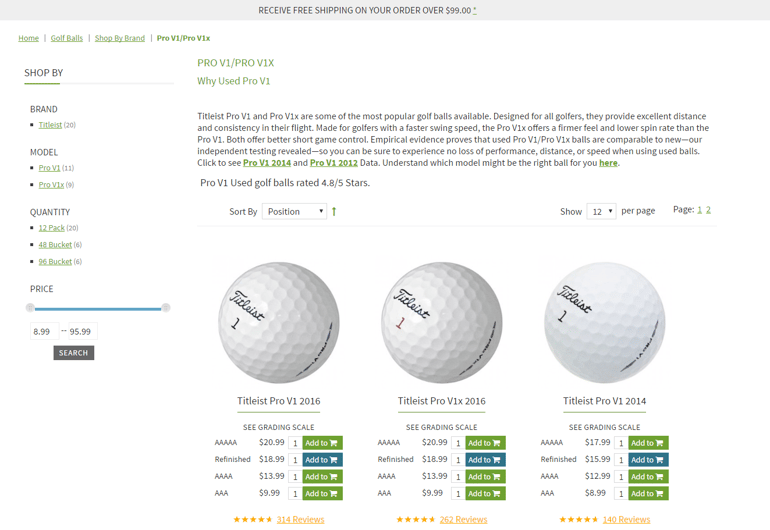
Check Out The Pro V1 Page Below

Pro_V1_Page.png


Heather Plyler
Heather Plyler
Heather Plyler is a golf enthusiast and has recently joined the E-Commerce team at Lost Golf Balls. She graduated from University of Houston-Downtown in 2013 with a Bachelor’s degree for Corporate Communications. Heather is passionate about golf whether it is playing a round on the course or communicating with others about their last Round. She has been involved in the sport for 10 years that has given her an insight into the commercial value of the products associated with the sport.

Related Posts

Should Equipment Changes Be Made Public in PGA Tour Events?

Should equipment changes be noted publicly before a player tees it up in a PGA Tour event? While that may sound crazy, it is common practice in horse racing. Some bettors want all the information they can get. With gambling now a big part of sports, I don’t think it’s a crazy idea. Already this year we saw Collin Morikawa (TaylorMade TP5x) winning an event with a putter borrowed from another player. Chris Gotterup (Bridgestone Tour B X with Mindset) won two tournaments this year after changing ball. And remember when Scottie Scheffler (Titleist Pro V1) went on a tear changing to a blade putter to a mallet putter?

Genesis Invitational Gives Us The Reality Of Sports

I’ve written this before and I’m repeating it because it never ceases to amaze me how televised sports is the ultimate reality show, the thrill of victory and the agony of defeat, as the now-defunct ABC Wild Word of Sports used as its intro. On the final hole of the Pebble Beach Open, Jacob Bridgeman (TaylorMade TP5x) was hitting a shot off of pebbles on the beach on the 18th hole. His ball ended up in the ocean and resulted in a bogey, tying him for eighth place when he was close enough starting the hole for a much better finish. I thought his spirits were crushed and dismissed him for the Genesis Invitational. So what does he do? Goes on a tear and headed into the final day, chasing a tournament record score. But he nearly frittered away the win, coming undone on the back half of the back nine and eking out a single stroke victory, and only because he parred a four-foot putt that must have seemed much longer because of the pressure. That’s drama, real drama, not manufactured reality. He won the event for the first time in his 66th tournament on the PGA Tour and only 65 days after marrying.

It's Time To Talk About Tiger Woods Again

Some thoughts on the world of golf with the Masters less than eight weeks away: When Tiger Woods (Bridgestone Tour B XS) speaks, we all listen. As the host of the Genesis Invitational this week, Woods held his annual address about his health, career, playing in the Masters and the PGA Tour at large. Woods is gradually returning to swinging his clubs from his latest back surgery last fall, which naturally had reporters asking him about his playing status. He did not specify when he will return to playing again, yet he tersely and emphatically did not rule out playing in the Masters. “No,” he said. Woods has always tried to play in the Masters, no matter his physical condition.