---
title: Why Musicians Like To Golf
description: "Ever wonder why musicians like to golf? Hint: golf is a great stress reliever."
image: http://cdn2.hubspot.net/hubfs/571772/Blog/gil-moore-01.jpg
---
866.639.4819 - 8AM - 5PM (CST) M-F.
- [Best Ball For You](https://info.lostgolfballs.com/whats-the-best-ball-for-you)
- [Grading Scale](https://www.lostgolfballs.com/gradingscale)
- [Sign In](https://www.lostgolfballs.com/customer/account/login/)
- [Cart](https://blog.lostgolfballs.com/checkout/cart/)
**Lostgolfballs**
- [Golf Balls](https://www.lostgolfballs.com/golf-balls.html)
- [Golf Balls](https://www.lostgolfballs.com/golf-balls.html)
- - [Shop By Quantity](https://www.lostgolfballs.com/golf-balls/quantity.html)
- - [12 Packs](https://www.lostgolfballs.com/golf-balls/quantity/12-packs.html)
- - [48 Buckets](https://www.lostgolfballs.com/golf-balls/quantity/48-buckets.html)
- - [96 Buckets](https://www.lostgolfballs.com/golf-balls/quantity/96-buckets.html)
- - [Shop By Quality](https://www.lostgolfballs.com/golf-balls/quality.html)
- - [Mint (5A)](https://www.lostgolfballs.com/golf-balls/quality/aaaaa-1st-quality.html)
- - [Mint No Logo (Refinished)](https://www.lostgolfballs.com/golf-balls/quality/refinished.html)
- - [Near Mint (4A)](https://www.lostgolfballs.com/golf-balls/quality/aaaa-2nd-quality.html)
- - [Good (3A)](https://www.lostgolfballs.com/golf-balls/quality/aaa-3rd-quality.html)
- - [Shop By Brand](https://www.lostgolfballs.com/golf-balls/brands.html)
- - [Pro V1/Pro V1x](https://www.lostgolfballs.com/golf-balls/brands/pro-v1.html)
- - [Titleist](https://www.lostgolfballs.com/golf-balls/brands/titleist.html)
- - [Bridgestone](https://www.lostgolfballs.com/golf-balls/brands/bridgestone.html)
- - [Callaway](https://www.lostgolfballs.com/golf-balls/brands/callaway.html)
- - [Nike](https://www.lostgolfballs.com/golf-balls/brands/nike.html)
- - [Srixon](https://www.lostgolfballs.com/golf-balls/brands/srixon.html)
- - [TaylorMade](https://www.lostgolfballs.com/golf-balls/brands/taylormade.html)
- - [Kirkland](https://www.lostgolfballs.com/golf-balls/brands/kirkland.html)
- - [Snell](https://www.lostgolfballs.com/golf-balls/brands/snell.html)
- - [Volvik](https://www.lostgolfballs.com/golf-balls/brands/volvik.html)
- - [Vice](https://www.lostgolfballs.com/golf-balls/brands/vice.html)
- - [Wilson](https://www.lostgolfballs.com/golf-balls/brands/wilson.html)
- - [Shop By Assorted](https://www.lostgolfballs.com/golf-balls/assorted.html)
- - [Other Brands](https://www.lostgolfballs.com/golf-balls/assorted/other-brands.html)
- - [Colored](https://www.lostgolfballs.com/golf-balls/assorted/colored-golf-balls.html)
- - [Pink](https://www.lostgolfballs.com/golf-balls/assorted/colored-golf-balls/pink-golf-balls.html)
- - [Yellow](https://www.lostgolfballs.com/golf-balls/assorted/colored-golf-balls/yellow-golf-balls.html)
- - [Orange](https://www.lostgolfballs.com/golf-balls/assorted/colored-golf-balls/orange.html)
- - [Crystals](https://www.lostgolfballs.com/golf-balls/assorted/colored-golf-balls/crystals.html)
- - [Range/Floater Balls](https://www.lostgolfballs.com/golf-balls/assorted/range-floater-balls.html)
- - [Novelty](https://www.lostgolfballs.com/golf-balls/assorted/novelty.html)
- - [Women's Golf Balls](https://www.lostgolfballs.com/golf-balls/assorted/womens-golf-balls.html)
- - [Golf Balls for Seniors](https://www.lostgolfballs.com/golf-balls/assorted/golf-balls-for-seniors.html)
- [New Arrivals](https://www.lostgolfballs.com/golf-balls/assorted/new-arrivals.html)
- [Deals](https://www.lostgolfballs.com/deals.html)
- [Deals](https://www.lostgolfballs.com/deals.html)
- - [Sample Packs](https://www.lostgolfballs.com/deals/sample-packs.html)
- - [Used Golf Ball Clearance](https://www.lostgolfballs.com/deals/clearance.html)
- - [Practice Golf Balls & Other Value Items](https://www.lostgolfballs.com/deals/value-items.html)
- [Accessories](https://www.lostgolfballs.com/golf-accessories.html)
- [Accessories](https://www.lostgolfballs.com/golf-accessories.html)
- - [Tees](https://www.lostgolfballs.com/golf-accessories/tees.html)
- - [Gloves](https://www.lostgolfballs.com/golf-accessories/gloves.html)
- - [SuperStroke Grips](https://www.lostgolfballs.com/golf-accessories/superstroke-grips.html)
- - [Tee Time Extras](https://www.lostgolfballs.com/golf-accessories/tee-time-extras.html)
- - [Shag Bag](https://www.lostgolfballs.com/golf-accessories/shag-bag.html)
[Home](https://www.lostgolfballs.com/)
- Golf Balls
Back
Golf Balls
- [Golf Balls](https://www.lostgolfballs.com/golf-balls.html)
- - [Shop By Quantity](https://www.lostgolfballs.com/golf-balls/quantity.html)
- - [12 Packs](https://www.lostgolfballs.com/golf-balls/quantity/12-packs.html)
- - [48 Buckets](https://www.lostgolfballs.com/golf-balls/quantity/48-buckets.html)
- - [96 Buckets](https://www.lostgolfballs.com/golf-balls/quantity/96-buckets.html)
- - [Shop By Quality](https://www.lostgolfballs.com/golf-balls/quality.html)
- - [Mint (5A)](https://www.lostgolfballs.com/golf-balls/quality/aaaaa-1st-quality.html)
- - [Mint No Logo (Refinished)](https://www.lostgolfballs.com/golf-balls/quality/refinished.html)
- - [Near Mint (4A)](https://www.lostgolfballs.com/golf-balls/quality/aaaa-2nd-quality.html)
- - [Good (3A)](https://www.lostgolfballs.com/golf-balls/quality/aaa-3rd-quality.html)
- - [Shop By Brand](https://www.lostgolfballs.com/golf-balls/brands.html)
- - [Pro V1/Pro V1x](https://www.lostgolfballs.com/golf-balls/brands/pro-v1.html)
- - [Titleist](https://www.lostgolfballs.com/golf-balls/brands/titleist.html)
- - [Bridgestone](https://www.lostgolfballs.com/golf-balls/brands/bridgestone.html)
- - [Callaway](https://www.lostgolfballs.com/golf-balls/brands/callaway.html)
- - [Nike](https://www.lostgolfballs.com/golf-balls/brands/nike.html)
- - [Srixon](https://www.lostgolfballs.com/golf-balls/brands/srixon.html)
- - [TaylorMade](https://www.lostgolfballs.com/golf-balls/brands/taylormade.html)
- - [Kirkland](https://www.lostgolfballs.com/golf-balls/brands/kirkland.html)
- - [Snell](https://www.lostgolfballs.com/golf-balls/brands/snell.html)
- - [Volvik](https://www.lostgolfballs.com/golf-balls/brands/volvik.html)
- - [Vice](https://www.lostgolfballs.com/golf-balls/brands/vice.html)
- - [Wilson](https://www.lostgolfballs.com/golf-balls/brands/wilson.html)
- - [Shop By Assorted](https://www.lostgolfballs.com/golf-balls/assorted.html)
- - [Other Brands](https://www.lostgolfballs.com/golf-balls/assorted/other-brands.html)
- - [Colored](https://www.lostgolfballs.com/golf-balls/assorted/colored-golf-balls.html)
- - [Pink](https://www.lostgolfballs.com/golf-balls/assorted/colored-golf-balls/pink-golf-balls.html)
- - [Yellow](https://www.lostgolfballs.com/golf-balls/assorted/colored-golf-balls/yellow-golf-balls.html)
- - [Orange](https://www.lostgolfballs.com/golf-balls/assorted/colored-golf-balls/orange.html)
- - [Crystals](https://www.lostgolfballs.com/golf-balls/assorted/colored-golf-balls/crystals.html)
- - [Range/Floater Balls](https://www.lostgolfballs.com/golf-balls/assorted/range-floater-balls.html)
- - [Novelty](https://www.lostgolfballs.com/golf-balls/assorted/novelty.html)
- - [Women's Golf Balls](https://www.lostgolfballs.com/golf-balls/assorted/womens-golf-balls.html)
- - [Golf Balls for Seniors](https://www.lostgolfballs.com/golf-balls/assorted/golf-balls-for-seniors.html)
- [New Arrivals](https://www.lostgolfballs.com/golf-balls/assorted/new-arrivals.html)
- Deals
Back
Deals
- [Deals](https://www.lostgolfballs.com/deals.html)
- - [Sample Packs](https://www.lostgolfballs.com/deals/sample-packs.html)
- - [Used Golf Ball Clearance](https://www.lostgolfballs.com/deals/clearance.html)
- - [Practice Golf Balls & Other Value Items](https://www.lostgolfballs.com/deals/value-items.html)
- Accessories
Back
Accessories
- [Accessories](https://www.lostgolfballs.com/golf-accessories.html)
- - [Tees](https://www.lostgolfballs.com/golf-accessories/tees.html)
- - [Gloves](https://www.lostgolfballs.com/golf-accessories/gloves.html)
- - [SuperStroke Grips](https://www.lostgolfballs.com/golf-accessories/superstroke-grips.html)
- - [Tee Time Extras](https://www.lostgolfballs.com/golf-accessories/tee-time-extras.html)
- - [Shag Bag](https://www.lostgolfballs.com/golf-accessories/shag-bag.html)
Menu
[](https://palmspire-3842749.hs-sites.com/growth-home-1)
- [Home page](https://313908.hs-sites.com)
- [About Us](https://313908.hs-sites.com/about-us)
- [Management Team](https://313908.hs-sites.com/about-us/management-team)
- [Contact Us](https://313908.hs-sites.com/about-us/contact-us)
- [Products](https://313908.hs-sites.com/products)
- [Product 1](https://313908.hs-sites.com/products/product-1)
- [Product Variation 1](https://313908.hs-sites.com/products/product-1/variation-1)
- [Product Variation 2](https://313908.hs-sites.com/products/product-1/variation-2)
- [Product 1](https://313908.hs-sites.com/products/product-2)
- [Lost Golf Balls Blog](https://blog.lostgolfballs.com)
LostGolfBalls.com **BLOG**
Information and tips on everything golf ball related from the largest recycler of used golf balls in the world
- [Golf Makes the World Go Round](https://blog.lostgolfballs.com/topic/golf-makes-the-world-go-round)
# [Why Musicians Like To Golf](https://blog.lostgolfballs.com/why-musicians-like-to-golf)
[Read More →](https://blog.lostgolfballs.com/why-musicians-like-to-golf)
### Posts by Tag
- [PGA Events (329)](https://blog.lostgolfballs.com/topic/pga-events)
- [Golf (311)](https://blog.lostgolfballs.com/topic/golf)
- [Golf Trends (297)](https://blog.lostgolfballs.com/topic/golf-trends)
- [Golf Makes the World Go Round (192)](https://blog.lostgolfballs.com/topic/golf-makes-the-world-go-round)
- [On the Course (86)](https://blog.lostgolfballs.com/topic/on-the-course)
- [Golf Balls (76)](https://blog.lostgolfballs.com/topic/golf-balls)
- [Improving Your Game (44)](https://blog.lostgolfballs.com/topic/improving-your-game)
- [PGA Championship (42)](https://blog.lostgolfballs.com/topic/pga-championship)
- [Golf Ball Manufacturers (31)](https://blog.lostgolfballs.com/topic/golf-ball-manufacturers)
- [Golf Courses (17)](https://blog.lostgolfballs.com/topic/golf-courses)
- [LPGA (12)](https://blog.lostgolfballs.com/topic/lpga)
- [Golf Betting (10)](https://blog.lostgolfballs.com/topic/golf-betting)
- [Best Ball For You (9)](https://blog.lostgolfballs.com/topic/best-ball-for-you)
- [U.S. Open (6)](https://blog.lostgolfballs.com/topic/u-s-open)
- [Ryder Cup (4)](https://blog.lostgolfballs.com/topic/ryder-cup)
- [British Open (3)](https://blog.lostgolfballs.com/topic/british-open)
- [FedEx Championship (3)](https://blog.lostgolfballs.com/topic/fedex-championship)
- [Masters 2018 (3)](https://blog.lostgolfballs.com/topic/masters-2018)
- [The Masters (3)](https://blog.lostgolfballs.com/topic/the-masters)
- [2019 Players Championship (1)](https://blog.lostgolfballs.com/topic/2019-players-championship)
- [Bridgestone (1)](https://blog.lostgolfballs.com/topic/bridgestone)
- [LIV Golf (1)](https://blog.lostgolfballs.com/topic/liv-golf)
see all
-
-
-
[All Posts](https://blog.lostgolfballs.com)
# Why Musicians Like To Golf
- [Tweet](https://twitter.com/share)

Many famous musicians also happen to be avid golfers.
Probably the most famous one of all is Alice Cooper, who wrote about it in his book: *Alice Cooper, Golf Monster: A Rock 'n' Roller's Life and 12 Steps to Becoming a Golf Addict*.
Some other high-profile musicians include: Kenny G., Justin Timberlake, Snoop Dogg and Adam Levine.
To try to understand what it is about the game of golf that attracts musicians, I asked Gil Moore, who was the drummer for Triumph, a Canadian-based rock and roll band that hit it big in the U.S., beginning in Texas in the mid-70s and went on to play in some major international gigs, including the US Festival in California in 1983. Triumph was part of Heavy Metal Day that included acts such as Judas Priest, Quiet Riot, Ozzy Osbourne, Scorpion, Van Halen and Motley Crue.
Moore, now 59, retired from his full-time career as a musician in the 90s to concentrate on his sound and recording company, Metalworks. The Mississauga, Ontario, Canada-based studio has attracted some of the best musicians in the world, including the likes of Drake, Lil Wayne, Katy Perry, Jonas Brothers, Bruce Springsteen, Guns And Roses, Rush, Tina Turner and Christina Aguilera, to name a few.
Moore played golf growing up, abandoned it to pursue his musical career, and embraced the game again when Triumph started to tour on a full-time basis in his mid-20s.
“Because of the stress of the road, I started to play again just to kind of get away from Triumph,” he says. “It really serves that purpose, even today. I play to get away from Metalworks and all the hubbub and the intensity of the music and entertainment business. That’s what it was for me. That’s what does it.
“For musicians, it’s almost the antithesis of what (everyday people) would think. You get out there and it really takes you away from this intense business and it gets you into an environment that is the complete opposite to the one you’re accustomed to. I think there’s really a connection (between musicians and golf), there’s no doubt about it, especially in rock…It’s funny how life goes full circle. When I was a kid, one of the reasons I quit playing was because all the guys I was hanging around with in my band were growing our hair long and stuff, which was not really cool at the country clubs back then. Now I feel like musicians get special treatment. Everywhere I go, especially if I’m playing with a bunch of (other musicians), we get great treatment because the guys running the pro shop or the clubhouse are great music fans.”

*Tom Cochrane focusing on sinking a putt.*
*Photo Cred: CLIFFORD SKARSTEDT/PETERBOROUGH EXAMINER/QMI AGENCY*
Once a year, he and Tom Cochrane, famous for his song Life Is A Highway, and Rush guitarist Alex Lifeson go away on a golf vacation. They have played on some of the most famous courses throughout the world.
So how good is Moore?
“Everyone calls me a scratch golfer. The number of scratch golfers is few and far between,” he says. “Scratch essentially means you have a zero handicap. My handicap vacillates. It’s never been lower than three and never been higher than six, and most of the time it’s between four and five. To be scratch or zero, that’s a phenomenal accomplishment. I’d love to be scratch, but I’m not.”
He developed his game studying golf books, in particular one his father purchased for him, the Ben Hogan bible *Five Lessons: The Fundamentals Of Golf*.
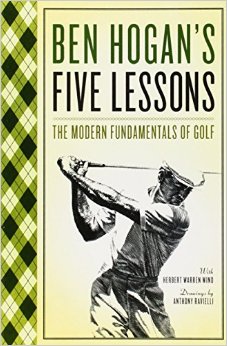
“I don’t think there’s a golf pro in the world that hasn’t read that book from cover to cover,” he says. “My Dad inscribed it, ‘Consult Ben often. Ben can be your best friend on the golf course, Love Dad.’
“To whatever that level was, I was a natural. I just figured it out by reading Ben Hogan’s book and swinging the club, and that was it. Look at Bubba Watson, he’s one of the best golfers in the world and he doesn’t have a swing coach.”
---
*This post was originally published by Knetgolf on August 9, 2016. Knetgolf was acquired by LostGolfBalls.*

###### Perry Lefko
Perry Lefko is an award-winning writer who has published nine books, three of them bestsellers. He has been involved in sports writing for more than 35 years and has interviewed many superstar athletes. He lives in Mississauga, Ontario, Canada and enjoys watching golf and playing it.

- Recent
- Popular
- Categories
### Lists by Topic
- [PGA Events (329)](https://blog.lostgolfballs.com/topic/pga-events)
- [Golf (311)](https://blog.lostgolfballs.com/topic/golf)
- [Golf Trends (297)](https://blog.lostgolfballs.com/topic/golf-trends)
- [Golf Makes the World Go Round (192)](https://blog.lostgolfballs.com/topic/golf-makes-the-world-go-round)
- [On the Course (86)](https://blog.lostgolfballs.com/topic/on-the-course)
- [Golf Balls (76)](https://blog.lostgolfballs.com/topic/golf-balls)
- [Improving Your Game (44)](https://blog.lostgolfballs.com/topic/improving-your-game)
- [PGA Championship (42)](https://blog.lostgolfballs.com/topic/pga-championship)
- [Golf Ball Manufacturers (31)](https://blog.lostgolfballs.com/topic/golf-ball-manufacturers)
- [Golf Courses (17)](https://blog.lostgolfballs.com/topic/golf-courses)
- [LPGA (12)](https://blog.lostgolfballs.com/topic/lpga)
- [Golf Betting (10)](https://blog.lostgolfballs.com/topic/golf-betting)
- [Best Ball For You (9)](https://blog.lostgolfballs.com/topic/best-ball-for-you)
- [U.S. Open (6)](https://blog.lostgolfballs.com/topic/u-s-open)
- [Ryder Cup (4)](https://blog.lostgolfballs.com/topic/ryder-cup)
- [British Open (3)](https://blog.lostgolfballs.com/topic/british-open)
- [FedEx Championship (3)](https://blog.lostgolfballs.com/topic/fedex-championship)
- [Masters 2018 (3)](https://blog.lostgolfballs.com/topic/masters-2018)
- [The Masters (3)](https://blog.lostgolfballs.com/topic/the-masters)
- [2019 Players Championship (1)](https://blog.lostgolfballs.com/topic/2019-players-championship)
- [Bridgestone (1)](https://blog.lostgolfballs.com/topic/bridgestone)
- [LIV Golf (1)](https://blog.lostgolfballs.com/topic/liv-golf)
see all
[Tweets by TwitterDev](https://twitter.com/lostgolfballs)
**Subscribe and Get The Latest News**
**Related Posts**
## [Not Exactly a Fan of the Proposed PGA Tour Schedule for 2028](https://blog.lostgolfballs.com/not-exactly-a-fan-of-the-proposed-pga-tour-schedule-for-2028)
So now we officially know the PGA Tour will undergo a significant schedule change in 2028, though the particulars still have to be ironed out. But I’m not a big fan of what we’ve heard so far with the sole exception being turning the Tour Championship into match play. Essentially, beginning in 2028, the schedule will feature a Championship Series with the biggest names playing for purses over $20 million. There will be the Championship Challenger Series with $4 million purses.
- [Perry Lefko](https://blog.lostgolfballs.com/author/perry-lefko)
- 9 min read
- 01 Jul,2026
## [1 Billion and Counting: PG Golf and LostGolfBalls.com Hit Historic Milestone](https://blog.lostgolfballs.com/1-billion-and-counting-pg-golf-and-lostgolfballs.com-hit-historic-milestone)
A milestone that underscores decades of innovation, sustainability, and trust among 1+ million golfers nationwide. Sugar Land, Texas (June 24th, 2026) PG Golf and LostGolfBalls.com proudly announced today the sale of their 1 billionth recycled golf ball, marking a historic milestone in the company’s mission to make golf more affordable and environmentally sustainable.
- [LostGolfBalls.com](https://blog.lostgolfballs.com/author/lostgolfballs-com)
- 3 min read
- 25 Jun,2026
## [Clark and Burns Play Well, But in the Wrong Tournament](https://blog.lostgolfballs.com/clark-and-burns-play-well-but-in-the-wrong-tournament)
Wyndham Clark (Titleist Pro V1x) and Sam Burns (Callaway Chrome Tour X) did just what I thought they would, albeit a week later. Heading into Canadian Open, I picked Clark and Burns as my two choices in the PG Golf pool. It was the second time using both in the pool, and you are only allowed to pick a player twice. I loved Clark’s form – he had won the CJ Cup Byron Nelson and tied for third in the Memorial Tournament.
- [Perry Lefko](https://blog.lostgolfballs.com/author/perry-lefko)
- 9 min read
- 24 Jun,2026
### Subscribe to Email Updates
[](https://palmspire-3842749.hs-sites.com/growth-home-1)
We help companies and marketers save time and generate more leads via drag and drop HubSpot COS conversion focussed templates.
##### Features
##### About Us
##### Company
© Copyright 2017-18
SIGN UP FOR OUR NEWSLETTER
-
-
-
-
-
About Us
- [LGB Story](https://www.lostgolfballs.com/aboutus)
- [Press Room](https://www.lostgolfballs.com/pressroom)
- [Why Used](https://www.lostgolfballs.com/whyused)
Support
- [Contact Us](https://www.lostgolfballs.com/contacts)
- [Shipping Policy](https://www.lostgolfballs.com/shipping)
- [Return Policy](https://www.lostgolfballs.com/returns)
- [FAQs](https://www.lostgolfballs.com/faqs)
Explore
- [Best Ball For You](https://info.lostgolfballs.com/whats-the-best-ball-for-you)
- [Blog](https://blog.lostgolfballs.com/)
- [Golf Tips](https://www.lostgolfballs.com/golftips)
- [Grading Scale](https://www.lostgolfballs.com/gradingscale)
Wholesale
- [Selling Golf Balls](https://www.lostgolfballs.com/We-Buy)
- [Bulk Orders](https://info.lostgolfballs.com/wholesale-golf-balls-lostgolfballs)
- [School Orders](https://info.lostgolfballs.com/school-orders)
Browse
- [ProV1/ProV1x](https://www.lostgolfballs.com/golf-balls/brands/pro-v1.html)
- [Titleist](https://www.lostgolfballs.com/golf-balls/brands/titleist.html)
- [Bridgestone](https://www.lostgolfballs.com/golf-balls/brands/bridgestone.html)
- [Callaway](https://www.lostgolfballs.com/golf-balls/brands/callaway.html)
- [Nike](https://www.lostgolfballs.com/golf-balls/brands/nike.html)
- [Srixon](https://www.lostgolfballs.com/golf-balls/brands/srixon.html)
- [Taylormade](https://www.lostgolfballs.com/golf-balls/brands/taylormade.html)
- [Refinished](https://www.lostgolfballs.com/golf-balls/quality/refinished.html)
- [Deals](https://www.lostgolfballs.com/deals.html)
- [Accessories](https://www.lostgolfballs.com/golf-accessories.html)
Copyright © 2020 www.Lostgolfballs.com • All Rights Reserved.
- [Terms And Conditions](https://blog.lostgolfballs.com/termsandconditions)
- [Privacy Policy](https://blog.lostgolfballs.com/privacy-policy)
- [Ad And Cookie Policy](https://blog.lostgolfballs.com/ad-and-cookie-policy)
- [Sitemap](https://blog.lostgolfballs.com/catalog/seo_sitemap/category)
California:
- [Your Privacy Rights](https://blog.lostgolfballs.com/privacy-policy#ccpa)
- [Do Not Sell My Info](https://blog.lostgolfballs.com/do-not-sell-my-info)
